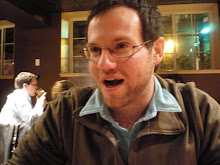
I haven't had time to write anything for the past three weeks. The primary reason is that I've been packing and preparing to leave for two of those weeks.
I got a job, for the summer, working at a Jewish spirituality and retreat center in the Berkshires. It's called Elat Chayyim, which is affiliated with an institution called the Isabella Freedman Center.
www.isabellafreedman.org
I start work on monday (today being thursday). I hope to keep writing about my experiences in Israel, as there are a few blog entries I'm behind on. Perhaps I'll also find some time to write about the things I'm experiencing at Elat Chayyim as well.
In the meantime, I'm going to enjoy the free wireless at Ben Gurion Airport, and be thankful that I wasn't hassled at all by security.
Thursday, May 14, 2009

Tuesday, April 28, 2009
dulce et decorum est pro patria mori
I guess I'm on something of a poetry kick these days. The following has been one of my favorites since high school.
Bent double, like old beggars under sacks,
Knock-kneed, coughing like hags, we cursed through sludge,
Till on the haunting flares we turned our backs
And towards our distant rest began to trudge.
Men marched asleep. Many had lost their boots
But limped on, blood-shod. All went lame; all blind;
Drunk with fatigue; deaf even to the hoots
Of tired, outstripped Five-Nines that dropped behind.
Gas! Gas! Quick, boys! – An ecstasy of fumbling,
Fitting the clumsy helmets just in time;
But someone still was yelling out and stumbling,
And flound'ring like a man in fire or lime . . .
Dim, through the misty panes and thick green light,
As under a green sea, I saw him drowning.
In all my dreams, before my helpless sight,
He plunges at me, guttering, choking, drowning.
If in some smothering dreams you too could pace
Behind the wagon that we flung him in,
And watch the white eyes writhing in his face,
His hanging face, like a devil's sick of sin;
If you could hear, at every jolt, the blood
Come gargling from the froth-corrupted lungs,
Obscene as cancer, bitter as the cud
Of vile, incurable sores on innocent tongues,
My friend, you would not tell with such high zest
To children ardent for some desperate glory,
The old Lie; Dulce et Decorum est
Pro patria mori.
Wilifred Owen 1893-1918
The last line is from an old Latin poem. It translates to "It is sweet and right to die for one's country."
Today is Israel's Memorial day for it's fallen soldiers. One day, maybe we'll move away the paradigm of romanticizing brutal violence in the name of abstract ideas.
Bent double, like old beggars under sacks,
Knock-kneed, coughing like hags, we cursed through sludge,
Till on the haunting flares we turned our backs
And towards our distant rest began to trudge.
Men marched asleep. Many had lost their boots
But limped on, blood-shod. All went lame; all blind;
Drunk with fatigue; deaf even to the hoots
Of tired, outstripped Five-Nines that dropped behind.
Gas! Gas! Quick, boys! – An ecstasy of fumbling,
Fitting the clumsy helmets just in time;
But someone still was yelling out and stumbling,
And flound'ring like a man in fire or lime . . .
Dim, through the misty panes and thick green light,
As under a green sea, I saw him drowning.
In all my dreams, before my helpless sight,
He plunges at me, guttering, choking, drowning.
If in some smothering dreams you too could pace
Behind the wagon that we flung him in,
And watch the white eyes writhing in his face,
His hanging face, like a devil's sick of sin;
If you could hear, at every jolt, the blood
Come gargling from the froth-corrupted lungs,
Obscene as cancer, bitter as the cud
Of vile, incurable sores on innocent tongues,
My friend, you would not tell with such high zest
To children ardent for some desperate glory,
The old Lie; Dulce et Decorum est
Pro patria mori.
Wilifred Owen 1893-1918
The last line is from an old Latin poem. It translates to "It is sweet and right to die for one's country."
Today is Israel's Memorial day for it's fallen soldiers. One day, maybe we'll move away the paradigm of romanticizing brutal violence in the name of abstract ideas.
Friday, April 24, 2009
one goat (pesach part 1 of ?)
One of the best-known Passover songs is חד גדיא (Chad Gadya), usually translated as “An Only Kid" (kid like baby goat). Sung towards the end of the Pesach Seder, it is a cumulative-counting song like “I knew and old woman who swallowed a fly.” The final verse of Chad Gadya goes:
“And Came the Holy One Blessed be He [G-d] and slew the Angel of Death that slaughtered the slaughterer that slaughtered the ox that drank the water that quenched the fire that burned the stick that beat the dog that bit the cat that ate the goat that father bought for Two Zuzim, one goat, one goat.”
There are a lot of interpretations of the song. Perhaps the most common understanding is that it is a nonsensical song that keeps children awake and gives them something to look forward to at the end of a really long meal.
Another interpretation (the two are not mutually exclusive) is that it is about the history of the land of Israel. Each character represents someone who has lived in/conquered the land of Israel. The goat represents the Jews, acquired with the two tablets of the Ten Comandments. The cat is Assyria, the Dog Babylon, the stick Persia, the fire Greece, the water Rome, the ox the Byzantine Empire, the slaughterer the Crusaders, the Angel of the Death the Ottoman Empire. G-d, representing himself, has the final word.
It isn’t exactly the most uplifting of interpretations. Then again, neither is human history. I think the song very accurately reflects the helplessness of being stuck in a cycle of violence.
The following is poem from one of the Hebrew language’s great poets. Yehuda Amichai was born in Germany in 1924. He escaped to British Palestine and became a member of the Palmach, a violent Jewish paramilitary organization that was important to the Jewish victory in the 1948 War of Independence. Later in life his politics shifted. He became and advocate of peace and reconciliation and worked with Arab writers on creating works along those themes.
This poem has many layers of religious, social, historical and personal meaning. It was written between 1948 and 1967. During that period, Jerusalem was a divided city (at least differently divided from today). The topography of the poem is the no-man’s-land that separated Jordan from Israel; a dangerous place that was shot at by both sides.
An Arab Shepherd is Searching for His Goat on Mount Zion
An Arab shepherd is searching for his goat on Mount Zion
and on the opposite mountain I am searching
for my little boy.
An Arab shepherd and a Jewish father
both in their temporary failure.
Our voices meet
above the Sultan’s Pool in the valley between us.
Neither of us wants
the child or the goat to get caught in the wheels
of the terrible Had Gadya machine.
Afterward we found them among the bushes
and our voices came back inside us, laughing and crying.
Searching for a goat or a son
has always been the beginning
of a new religion in these mountains.
-Yehuda Amichai; translated by Chana Block
I have a lot to say and write about this poem. But rather than bore you with my over-analysis, I'll summarize briefly. In Judaism and Christianity, Abraham the Patriarch was called upon to sacrifice his son Isaac not so very far from the action of the poem. The Islamic tradition holds that it was Abraham’s other son, Ishmael, father of the Arab people, who was nearly sacrificed on that occasion. And the Prophet Mohamed’s revelation occurred while searching for a lost goat, in a dream about that same spot.
Amichai’s poem is beautiful; it brought me to tears when I first read it. It refocuses historical and religious conflicts in the light of what is possible; the founding of a new religion (which might be better translated as “knowledge” in this case) versus the perpetuation of existing destructive patterns. I wonder how deeply in our consciousness these patterns and cycles are inscribed. It seems to me that they go back a long way, across a great many cultures. But in all three Abrahamic faiths G-d stopped Abraham from perpetuating the cycle of violence that was the sacrifice of children (a somewhat common practice in the region at the time). G-d isn’t so directly involved anymore (whether or he ever was is another discussion). So now in this day and age, and in this iteration of Amichai’s “Chad Gadya Machine,” it falls to human beings to play the part of the Angel who stays Abraham's knife wielding hand as it prepares to start the cycle over again.
Next year, whether I am in a rebuilt Jerusalem or not, I’ll read this poem after we sing “Chad Gadya.”
“And Came the Holy One Blessed be He [G-d] and slew the Angel of Death that slaughtered the slaughterer that slaughtered the ox that drank the water that quenched the fire that burned the stick that beat the dog that bit the cat that ate the goat that father bought for Two Zuzim, one goat, one goat.”
There are a lot of interpretations of the song. Perhaps the most common understanding is that it is a nonsensical song that keeps children awake and gives them something to look forward to at the end of a really long meal.
Another interpretation (the two are not mutually exclusive) is that it is about the history of the land of Israel. Each character represents someone who has lived in/conquered the land of Israel. The goat represents the Jews, acquired with the two tablets of the Ten Comandments. The cat is Assyria, the Dog Babylon, the stick Persia, the fire Greece, the water Rome, the ox the Byzantine Empire, the slaughterer the Crusaders, the Angel of the Death the Ottoman Empire. G-d, representing himself, has the final word.
It isn’t exactly the most uplifting of interpretations. Then again, neither is human history. I think the song very accurately reflects the helplessness of being stuck in a cycle of violence.
The following is poem from one of the Hebrew language’s great poets. Yehuda Amichai was born in Germany in 1924. He escaped to British Palestine and became a member of the Palmach, a violent Jewish paramilitary organization that was important to the Jewish victory in the 1948 War of Independence. Later in life his politics shifted. He became and advocate of peace and reconciliation and worked with Arab writers on creating works along those themes.
This poem has many layers of religious, social, historical and personal meaning. It was written between 1948 and 1967. During that period, Jerusalem was a divided city (at least differently divided from today). The topography of the poem is the no-man’s-land that separated Jordan from Israel; a dangerous place that was shot at by both sides.
An Arab Shepherd is Searching for His Goat on Mount Zion
An Arab shepherd is searching for his goat on Mount Zion
and on the opposite mountain I am searching
for my little boy.
An Arab shepherd and a Jewish father
both in their temporary failure.
Our voices meet
above the Sultan’s Pool in the valley between us.
Neither of us wants
the child or the goat to get caught in the wheels
of the terrible Had Gadya machine.
Afterward we found them among the bushes
and our voices came back inside us, laughing and crying.
Searching for a goat or a son
has always been the beginning
of a new religion in these mountains.
-Yehuda Amichai; translated by Chana Block
I have a lot to say and write about this poem. But rather than bore you with my over-analysis, I'll summarize briefly. In Judaism and Christianity, Abraham the Patriarch was called upon to sacrifice his son Isaac not so very far from the action of the poem. The Islamic tradition holds that it was Abraham’s other son, Ishmael, father of the Arab people, who was nearly sacrificed on that occasion. And the Prophet Mohamed’s revelation occurred while searching for a lost goat, in a dream about that same spot.
Amichai’s poem is beautiful; it brought me to tears when I first read it. It refocuses historical and religious conflicts in the light of what is possible; the founding of a new religion (which might be better translated as “knowledge” in this case) versus the perpetuation of existing destructive patterns. I wonder how deeply in our consciousness these patterns and cycles are inscribed. It seems to me that they go back a long way, across a great many cultures. But in all three Abrahamic faiths G-d stopped Abraham from perpetuating the cycle of violence that was the sacrifice of children (a somewhat common practice in the region at the time). G-d isn’t so directly involved anymore (whether or he ever was is another discussion). So now in this day and age, and in this iteration of Amichai’s “Chad Gadya Machine,” it falls to human beings to play the part of the Angel who stays Abraham's knife wielding hand as it prepares to start the cycle over again.
Next year, whether I am in a rebuilt Jerusalem or not, I’ll read this poem after we sing “Chad Gadya.”
Sunday, April 12, 2009
palm sunday
So, one might wonder why a nice Jewish boy like me is posting something about Palm Sunday and Easter on his blog. Especially given that his blog is named after part of the Passover liturgy and it is, right now, Passover. It doesn't really matter. My passover piece is in the works. But it doesn't involve parades or popes or incense or anything nearly as exciting as this morning's Coptic Palm Sunday Celebration.

 The Church of the Holy Sepulcher is built where, according to the Catholic and various Orthodox Churches, Jesus was crucified and buried and where he came back to life a little less than 2000 years ago. It is an exciting place to be on Easter. But given that the Western and Eastern Churches use different calculations to compute the date of Easter, when I thought it I was going to see Easter Celebrations, I actually happened in on the Coptic Archbishop of Jerusalem and his Palm Sunday procession around the shrine which used to be the cave (the cave itself was removed in order to build the church). The Copts are an Egyptian group who broke off from the rest of the church in the 400s CE (long before the reformation). The Coptic Pope lives in Alexandria, Egypt.


 The whole experience was beautiful, full of incense, pendants, robes of every imaginable color and monks of every imaginable size and style. It was different from any Catholic event I've been too. It felt more chaotic and less sterile. The Archbishop wore sunglasses (and a crown, he's pictured to the right). People wailed and cheered and cried as they reached out to touch the marchers and received olive sprigs and palm fronds in return. Other spectators held up their splendidly dressed babies and sang along to the hymns.
It was really interesting to get to watch Easter (well pre-Easter really) commemorated in the place where that particular miracle is supposed to have happened. My roommate and I were swept up in the power of the moment and stayed watching it unfold around us for almost and hour. Then we left, walked through the Old City for a while and finally bought kosher-for-passover ice cream.


 The Church of the Holy Sepulcher is built where, according to the Catholic and various Orthodox Churches, Jesus was crucified and buried and where he came back to life a little less than 2000 years ago. It is an exciting place to be on Easter. But given that the Western and Eastern Churches use different calculations to compute the date of Easter, when I thought it I was going to see Easter Celebrations, I actually happened in on the Coptic Archbishop of Jerusalem and his Palm Sunday procession around the shrine which used to be the cave (the cave itself was removed in order to build the church). The Copts are an Egyptian group who broke off from the rest of the church in the 400s CE (long before the reformation). The Coptic Pope lives in Alexandria, Egypt.

 The whole experience was beautiful, full of incense, pendants, robes of every imaginable color and monks of every imaginable size and style. It was different from any Catholic event I've been too. It felt more chaotic and less sterile. The Archbishop wore sunglasses (and a crown, he's pictured to the right). People wailed and cheered and cried as they reached out to touch the marchers and received olive sprigs and palm fronds in return. Other spectators held up their splendidly dressed babies and sang along to the hymns.
 It was really interesting to get to watch Easter (well pre-Easter really) commemorated in the place where that particular miracle is supposed to have happened. My roommate and I were swept up in the power of the moment and stayed watching it unfold around us for almost and hour. Then we left, walked through the Old City for a while and finally bought kosher-for-passover ice cream.
Wednesday, April 8, 2009
spring
Passover, in the States, preempts spring by as many as six weeks depending on how early or late it falls in the calendar. So although I've always known that is a holiday of the spring, even when it's been very warm for March in Maine or New York, it's never really felt like spring.
But in just the past week, it has become full on beautiful in bloom spring here in Israel. I've seen so many new things bloom and blossom that I've lost count. Here are a few photos of things I discovered just this morning as I was walking around doing last minute Pesach preparations.

Above is a fig tree. Complete with a tiny fig that seems like it sprouted overnight

These are an interesting fruit called Sheseq in Hebrew, and Loquat in English. It is not related to the Kumquat, but shares a similar etymology from Cantonese. They are related to apples and pears, and turn a beautiful pale orange color when ripe. A friend of mine most accurately described the flavor as that of a hypothetical "lemon-peach."

The bizzare alien probosci coming from the date palm pictured above are seed pods. The emerged slowly and I wasn't quite sure whether I should be alarmed or intrigued. This morning I saw one that had burst open. And there were the countless immature dates pictured below.

Tonight is the Passover Seder. I'll be spending it with some good friends. We'll be spending time thinking about the contemporary relevance of the liberation story, especially in light of the mess that is politics in this little strip of land. I'll try and post something about it soon.
But in just the past week, it has become full on beautiful in bloom spring here in Israel. I've seen so many new things bloom and blossom that I've lost count. Here are a few photos of things I discovered just this morning as I was walking around doing last minute Pesach preparations.

Above is a fig tree. Complete with a tiny fig that seems like it sprouted overnight

These are an interesting fruit called Sheseq in Hebrew, and Loquat in English. It is not related to the Kumquat, but shares a similar etymology from Cantonese. They are related to apples and pears, and turn a beautiful pale orange color when ripe. A friend of mine most accurately described the flavor as that of a hypothetical "lemon-peach."

The bizzare alien probosci coming from the date palm pictured above are seed pods. The emerged slowly and I wasn't quite sure whether I should be alarmed or intrigued. This morning I saw one that had burst open. And there were the countless immature dates pictured below.

Tonight is the Passover Seder. I'll be spending it with some good friends. We'll be spending time thinking about the contemporary relevance of the liberation story, especially in light of the mess that is politics in this little strip of land. I'll try and post something about it soon.
Thursday, April 2, 2009
almonds, revisited
You might remember from a few posts ago that the almond trees were blossoming. Well, now as spring has progressed, the almond trees have young almonds on them. They're edible, although to be honest a little strange. The green fuzz on the photo below is the outer layer of the fruit of which the almond is the pit (like a peach pit). This layer is removed before what we think of as whole almonds are sold. The white layer in the middle (in the photo) is what develops into what we know as the shell, and inside of that is a clear jelly, which is the immature nut. My vegetable guy told me to wash them, salt them, and eat them, fuzz included. Not bad, but not great either. They don't really taste like almonds. I'm told in three weeks or so they'll start to have a slight amaretto flavor and the fuzz will no longer be edible. A few weeks after that the shell matures, finally followed by the nut.
I'll keep you posted if any of those stages turn out to be wonderful.

I'll keep you posted if any of those stages turn out to be wonderful.

Monday, March 23, 2009
tahina and the krembo
The middle east is well known for humus. Indeed I will never again eat American grocery-store humus. Here, when the humus comes out from a restaurant kitchen (if you can call it a restaurant or a kitchen), still slightly warm from the mixer, topped with whole chickpeas, herbs, paprika, olive oil and a little tahina... I can't explain my joy. Sometimes I order it with a hardboiled egg, sometimes with deliciously spiced ground meat. Regardless of the combination, wolfed down with pita, it's amazing. I'll devote an upcoming blog entry to Humus, but it isn't really what I meant to talk about this time.
טחינה (Tkhinah) in Hebrew and طحينة (Tahinah) in Arabic is a paste made of ground sesame seeds. In Both languages it comes from the Proto-Semtic root meaning ground, or to grind. Tahina has a great many uses. The simplest is prepared into a dip or sauce (recipe to follow). But it features heavily in babganoush, humus and other salads. Halva, a dessert, is made from tahina and honey (and sometimes chocolate, coffee, nuts or dried fruit). It is also used to make cookies (like peanut butter cookies but so much better). I actually enjoy tahina more than humus (I could get stoned for saying that). I like it on salads, on raw vegetables, on roasted vegetables, on fish, on meat, with cheese, in sandwiches and with a spoon.
Paul's Simple Tahina
1 Cup raw Tahina
Juice of One Lemon
1/2 Cup Water
2 cloves garlic, minced finely or pressed through a garlic press
salt and pepper to taste
cayenne, cumin and paprika to taste
chopped parsley (a good handful or more)
Put the raw tahina in a bowl, and whisk a little. Add the lemon juice and continue whisking. At this point the paste will thicken and be difficult to mix. Add the garlic and spices. Slowly add the water (you may need a little more or a little less depending of the tahina you have and the weather). The water will make the mixture loosen. Whisk vigorously until the mixture becomes shiny, uniform and smooth. Add salt to taste and the parsley.
Lick the spoon as if it's chocolate frosting (okay I admit it might take a little cultivation for that to happen)
Pour over steamed or roasted vegetables, or use as dip for fresh vegetables and bread.

A slightly more obscure Israeli food is called the Krembo (קרמבו) it is the bigger brother of the mallowmar, and slightly more bizzare. The krembo is only available in the winter (it wouldn't last long in the heat of the summer), it is a cookie base with a mound of marshmalllowy fluff/meringue on top. The entire endeavor is dipped in chocolate. The filling can be coffee flavored (pictured) or vanilla. I'm not entirely sure I like krembos. But I don't dislike them, and something about them intrigues me. The best way to eat them is to freeze them for a while, the filling has a much more interesting texture after a few hours in the freezer. Krembos are made by one of the big ice cream companies, and are hence called "winter ice cream" by real fans. The term may also harken back to a time when Israel's economy wasn't so developed, and ice cream production was probably effected.

Enjoy the tahina, and I'll enjoy a krembo in your honor, before they go off the shelves next week.
טחינה (Tkhinah) in Hebrew and طحينة (Tahinah) in Arabic is a paste made of ground sesame seeds. In Both languages it comes from the Proto-Semtic root meaning ground, or to grind. Tahina has a great many uses. The simplest is prepared into a dip or sauce (recipe to follow). But it features heavily in babganoush, humus and other salads. Halva, a dessert, is made from tahina and honey (and sometimes chocolate, coffee, nuts or dried fruit). It is also used to make cookies (like peanut butter cookies but so much better). I actually enjoy tahina more than humus (I could get stoned for saying that). I like it on salads, on raw vegetables, on roasted vegetables, on fish, on meat, with cheese, in sandwiches and with a spoon.
Paul's Simple Tahina
1 Cup raw Tahina
Juice of One Lemon
1/2 Cup Water
2 cloves garlic, minced finely or pressed through a garlic press
salt and pepper to taste
cayenne, cumin and paprika to taste
chopped parsley (a good handful or more)
Put the raw tahina in a bowl, and whisk a little. Add the lemon juice and continue whisking. At this point the paste will thicken and be difficult to mix. Add the garlic and spices. Slowly add the water (you may need a little more or a little less depending of the tahina you have and the weather). The water will make the mixture loosen. Whisk vigorously until the mixture becomes shiny, uniform and smooth. Add salt to taste and the parsley.
Lick the spoon as if it's chocolate frosting (okay I admit it might take a little cultivation for that to happen)
Pour over steamed or roasted vegetables, or use as dip for fresh vegetables and bread.

A slightly more obscure Israeli food is called the Krembo (קרמבו) it is the bigger brother of the mallowmar, and slightly more bizzare. The krembo is only available in the winter (it wouldn't last long in the heat of the summer), it is a cookie base with a mound of marshmalllowy fluff/meringue on top. The entire endeavor is dipped in chocolate. The filling can be coffee flavored (pictured) or vanilla. I'm not entirely sure I like krembos. But I don't dislike them, and something about them intrigues me. The best way to eat them is to freeze them for a while, the filling has a much more interesting texture after a few hours in the freezer. Krembos are made by one of the big ice cream companies, and are hence called "winter ice cream" by real fans. The term may also harken back to a time when Israel's economy wasn't so developed, and ice cream production was probably effected.

Enjoy the tahina, and I'll enjoy a krembo in your honor, before they go off the shelves next week.
Sunday, February 22, 2009
doesn't grow in maine, revisited

 It is starting to be spring here, and that means that things are starting to blossom. The almond tree blooms about a month before everything else. My friend Meredith is miserable because almond pollen is apparently very allergenic (strangely I haven't felt allergic to it at all). I happen to think that almond blossoms are very beautiful.
 The first photo is a shot of a pollinator at work on an almond blossom. The second photo is some of last years almonds after wintering over on the branch.
Almonds are related to peaches and plums and other stone fruits. The black fuzzy layer in the second photo is a bit like the fuzzy skin of a peach. I think that's cool.
Sunday, February 15, 2009
my kingdom for a latte
It has been a big month since I last posted. Between National Elections, a surprise trip Nablus (in the north of the West Bank), a surprise trip to Masada (one of the great Nationalist symbols of Israel), and the recitation of Crossing of the Sea by the Children of Israel after their liberation from Egypt (a high point in the liturgical cycle of the Jews).
I have a lot to say about all of these events, but there’s a hitch. Every morning for the past six weeks I’ve woken up with a startlingly severe headache that is alleviated only with my first cup of coffee. I decided (after some soul searching) that it was time to cut down on my coffee intake. Nothing illustrates the addictive nature of coffee like trying to quit. I’ve spent a week in a slight haze, tired, grumpy and unable to focus on my studies, on life here, or on anything else. One of my friends, who shall remain nameless, pointed out that my grumpiness and confusion weren’t all that different from my normal state of being. I disagree; normally I’m grumpy because it is how I choose to relate to the world. Without coffee I am grumpy because I can’t access the “friendly” centers of my brain.
I’m told that this particular purgatory will pass within a few days. At that point my body will have gone through the worst of its withdrawal and will have readjusted to life without my favorite drug.
G-d I miss coffee. The things I would do for a cup right now… I’m not really proud of those things. Anyway, my ability to process complex politics, travels, or anything really at all has been compromised.
So instead, here is an introduction to one of my favorite Middle Eastern foods. Shakshuka. Shakshuka is a breakfast dish (or lunch or dinner). Like an omelet, Shakshuka can have many different configurations but always has several basic features. It always features cooked tomatoes and eggs. Sometimes it is made with meat, other times it is topped with cheese, and whatever fresh herbs happen to be at hand.
I’ve recently been experimenting with my own recipes and have come up with several. Most people use canned tomatoes to make shakshuka. Because we have decent fresh tomatoes all year here, I prefer to roast fresh tomatoes in the oven for a little while. The texture ends up being just like that of canned tomatoes, and the flavor far superior. If you don’t have good fresh tomatoes available (for instance if you live in the North Eastern United States in the winter) use canned tomatoes.
Following are two recipes; the first is for roasted tomatoes. Which are also great in pastas, sandwiches, quiches, or wherever you would use tomatoes. The second is for a basic shakshuka, which is easy to modify to your own tastes.
For the roasted tomatoes
10 medium tomatoes, cut in half and tossed in olive, salt and pepper
Roast the tomatoes, cut side down in a 350 degree oven for a half hour or until the skins blister and are easy to peel off. Then roast for another ten minutes. They should smell absolutely amazing at this point.
Paul’s Roasted Tomato Shakshuka (serves two)
4 eggs
1 medium onion chopped
1 yellow pepper chopped (yellow makes for the nicest color, but red and green also work)
10 roasted tomatoes or one 28-ounce can of good quality canned tomatoes, chopped
Garlic to taste (I like about five good sized cloves)
Cayenne, and Crushed Red Pepper to taste (Shakshuka should be SPICY)
Fresh Herbs, like oregano, parsley, chives, or basil, to taste
Olive oil
Heat two tablespoons of oil in a skillet big enough for all four eggs. When it is hot but not smoking, add the spices.
Let the spices cook for 15 seconds (they should be fragrant and the oil should turn red)
Add the onions and garlic and cook until translucent, stirring frequently
Add the yellow pepper, cook for three or four more minutes, stirring frequently
Add the tomatoes and cook for ten or fifteen minutes over a medium heat. You may need to add a little water. The mixture should be loose, but not watery.
Add the fresh herbs, salt and pepper and more spicy if you need, taste
Take a wooden spoon and make four indentations (the mixture should indent a little), crack an egg in each indentation
Sprinkle a little salt and pepper on each egg, and lower the heat. The eggs will cook in about five minutes; you may want to cover the pan in order for the eggs to cook more evenly.
You can serve it in bowls, although it is much easier to eat right out of the pan
Modifications: Shakshuka is great if you add good quality (kosher, of course) lamb or beef sausage, or ground meat. Sauté it before you cook the onions, remove when cooked and add it back in with the tomatoes.
Shakshuka is also wonderful with cheese (if you don’t keep kosher you can even do both meat and cheese, although it seems like it might be overkill). Add the cheese just before the eggs, and maybe sprinkle a little more on top.
A final delicious modification is eggplant. Sauteed, roasted, however. It's just good.


Shakshuka goes great with coffee...
I have a lot to say about all of these events, but there’s a hitch. Every morning for the past six weeks I’ve woken up with a startlingly severe headache that is alleviated only with my first cup of coffee. I decided (after some soul searching) that it was time to cut down on my coffee intake. Nothing illustrates the addictive nature of coffee like trying to quit. I’ve spent a week in a slight haze, tired, grumpy and unable to focus on my studies, on life here, or on anything else. One of my friends, who shall remain nameless, pointed out that my grumpiness and confusion weren’t all that different from my normal state of being. I disagree; normally I’m grumpy because it is how I choose to relate to the world. Without coffee I am grumpy because I can’t access the “friendly” centers of my brain.
I’m told that this particular purgatory will pass within a few days. At that point my body will have gone through the worst of its withdrawal and will have readjusted to life without my favorite drug.
G-d I miss coffee. The things I would do for a cup right now… I’m not really proud of those things. Anyway, my ability to process complex politics, travels, or anything really at all has been compromised.
So instead, here is an introduction to one of my favorite Middle Eastern foods. Shakshuka. Shakshuka is a breakfast dish (or lunch or dinner). Like an omelet, Shakshuka can have many different configurations but always has several basic features. It always features cooked tomatoes and eggs. Sometimes it is made with meat, other times it is topped with cheese, and whatever fresh herbs happen to be at hand.
I’ve recently been experimenting with my own recipes and have come up with several. Most people use canned tomatoes to make shakshuka. Because we have decent fresh tomatoes all year here, I prefer to roast fresh tomatoes in the oven for a little while. The texture ends up being just like that of canned tomatoes, and the flavor far superior. If you don’t have good fresh tomatoes available (for instance if you live in the North Eastern United States in the winter) use canned tomatoes.
Following are two recipes; the first is for roasted tomatoes. Which are also great in pastas, sandwiches, quiches, or wherever you would use tomatoes. The second is for a basic shakshuka, which is easy to modify to your own tastes.
For the roasted tomatoes
10 medium tomatoes, cut in half and tossed in olive, salt and pepper
Roast the tomatoes, cut side down in a 350 degree oven for a half hour or until the skins blister and are easy to peel off. Then roast for another ten minutes. They should smell absolutely amazing at this point.
Paul’s Roasted Tomato Shakshuka (serves two)
4 eggs
1 medium onion chopped
1 yellow pepper chopped (yellow makes for the nicest color, but red and green also work)
10 roasted tomatoes or one 28-ounce can of good quality canned tomatoes, chopped
Garlic to taste (I like about five good sized cloves)
Cayenne, and Crushed Red Pepper to taste (Shakshuka should be SPICY)
Fresh Herbs, like oregano, parsley, chives, or basil, to taste
Olive oil
Heat two tablespoons of oil in a skillet big enough for all four eggs. When it is hot but not smoking, add the spices.
Let the spices cook for 15 seconds (they should be fragrant and the oil should turn red)
Add the onions and garlic and cook until translucent, stirring frequently
Add the yellow pepper, cook for three or four more minutes, stirring frequently
Add the tomatoes and cook for ten or fifteen minutes over a medium heat. You may need to add a little water. The mixture should be loose, but not watery.
Add the fresh herbs, salt and pepper and more spicy if you need, taste
Take a wooden spoon and make four indentations (the mixture should indent a little), crack an egg in each indentation
Sprinkle a little salt and pepper on each egg, and lower the heat. The eggs will cook in about five minutes; you may want to cover the pan in order for the eggs to cook more evenly.
You can serve it in bowls, although it is much easier to eat right out of the pan
Modifications: Shakshuka is great if you add good quality (kosher, of course) lamb or beef sausage, or ground meat. Sauté it before you cook the onions, remove when cooked and add it back in with the tomatoes.
Shakshuka is also wonderful with cheese (if you don’t keep kosher you can even do both meat and cheese, although it seems like it might be overkill). Add the cheese just before the eggs, and maybe sprinkle a little more on top.
A final delicious modification is eggplant. Sauteed, roasted, however. It's just good.


Shakshuka goes great with coffee...
Monday, January 19, 2009
caught in the spiral
A few days ago, I spoke at length with my friend Sharif, about whose sartorial excellence and skill on the dance floor I've written several times. "Sharif" is somewhere between a name and a title given to boys who can trace their patrilineal heritage to the Prophet Mohammed. There are a lot of Sharifs. It is a little bit like the Jewish names Levi and Cohen, which indicate a patrilineal descent from the Tribe of Levi, or from Moses' brother Aaron (the first high priest, or Kohen Gadol).
Anyway, Sharif is eighteen years old. He wants to study engineering at Teknion, a university in Haifa, in the north of Israel, that is well known for technology. In order to enter Teknion, Sharif needs to pass a Hebrew Equivelncy test. The test, much like the Test of English as a Foreign Language (TOEFL), would be difficult for native speakers of the language. The name TOEFL is already a bit ridiculous. I would never say (in English or any other language I "speak") "I have a test of the physics of motion tomorrow. Language equivalency requires a good deal of knowledge of the grammatical structure of the language. Native speakers don't learn structural grammar because they learn by mimicking their parents. The grammar is either instinctual or incorrect. For instance, I had no idea what the subjunctive was in English, or even if I used it until I learned French. The other example is the tendency of English speakers to finish sentences with "...and I," even in the instances when the correct grammar would be "...and me."
Sharif, and many of the Palestinian Residents of East Jerusalem who are in my Hebrew class speak excellent (if not completely fluent) Hebrew. However, it is a somewhat imperfect Hebrew, with snippits of Arabic, and a general lack of proper grammar. This is because many of them learn Hebrew as they grow up, but not as a primary language. They have the problems of native speakers and the problems of non-native speakers. Many of them end up taking Hebrew from the beginning in order to learn the grammar. It ends up being very good for me, I get pushed along by a class that has a similar grammatical skill but an infinitely stronger skill in the language.
My Hebrew, in contrast to theirs, is inflected with Biblical Hebrew Grammar. This mostly comes out in my pronunciation. Think of what you might do if you ran into someone who spoke like the King James Bible. The problem is that I can't keep straight which grammar belongs where, and so I default to the Biblical, which has much more stringent laws (in language alone, I respond to and appreciate rules). My Hebrew isn't incorrect, but it probably sounds a little stilted or just silly to a native speaker, especially given my extremely limited vocabulary. All this is an aside, I was talking about my friend Sharif.
Sharif and I have had a lot of really inspiring and wonderful conversation over the past five months. He often shares pita with zatar and olive oil. I try to and occasionally succeed in buying him a coffee. The first conversation we had, he told me that he thinks Jews and Muslims are brothers. We talked about how both religions have a central sacrifice story. And about how Abraham is the father of all of us. There have been many lighter conversations too, many discussions of movies we both like, etc.
But last week, we had the hardest conversation I've had with him. We talked about Gaza. He feels angry and hopeless. The same two emotions I have been feeling for three weeks and a couple of days. Sharif is a kind and reasonable young man. This is somewhat unique among eighteen year olds. I was neither kind nor reasonable at eighteen, nor were any of my friends.
The problem is that Sharif is feeling, very personally, the 1300 deaths in Gaza. And he is feeling very personally the fact that the civilian population of Gaza has absolutely no where to go. When London was in the blitz, many children were sent away from London to safety. No one can leave the 40 km by 8 km area that is the Gaza Strip. Sharif calls it a prison. He says that what is going on there is like bombing a prison.
As I said, he is a kind and reasonable young man, interested in building friendships. Through the course of the past three weeks, his moderation has started to give way to his anger. And a young man interested in friendship and the brotherhood of the children of Abraham has started to talk more about Hamas.
This is the absolute failure of violence as a form of conflict resolution. It destroys the hope of people who, against great odds, remain reasonable. The absence of that hope leaves a vacuum. That vacuum is exactly what Hamas waits for.
Today is Martin Luther King Jr Day (observed). My first posted reaction to the war was a quote from him. I re-read that quote last night and found it more powerful in the light of three weeks in this intensified conflict zone. It broke my heart to see my Israeli, American and Palestinian friends and their exact locations in the descending spiral.
I pray that Sharif is given other options. And I pray that the hopeless masses for whom the bombing seems like a good idea are given other options. And most importantly I pray that everyone will stop praying for peace, and begin to think creatively about solutions. If left up to Hamas and Israel, this war will only escalate. It is left to us to present other options to the reasonable people caught in the middle of so much hatred, in order that they not be dragged down by the flailing desperation that surrounds them.
Without wanting to be overstate it, here again is the quote from Doctor Martin Luther King Jr (z''l). I ask you to re-read it, and on his observed birthday, the day before the inauguration of Barack Hussein Obama, begin to think creatively about solutions to problems that don't involve bombs, rockets, guns, or coercive force.
"The ultimate weakness of violence is that it is a descending spiral, begetting the very thing it seeks to destroy. Instead of diminishing evil, it multiplies it... Through violence you may murder the hater, but you do not murder hate. In fact, violence merely increases hate.... Returning violence for violence multiplies violence, adding deeper darkness to a night already devoid of stars. Darkness cannot drive out hate; only love can do that."
Anyway, Sharif is eighteen years old. He wants to study engineering at Teknion, a university in Haifa, in the north of Israel, that is well known for technology. In order to enter Teknion, Sharif needs to pass a Hebrew Equivelncy test. The test, much like the Test of English as a Foreign Language (TOEFL), would be difficult for native speakers of the language. The name TOEFL is already a bit ridiculous. I would never say (in English or any other language I "speak") "I have a test of the physics of motion tomorrow. Language equivalency requires a good deal of knowledge of the grammatical structure of the language. Native speakers don't learn structural grammar because they learn by mimicking their parents. The grammar is either instinctual or incorrect. For instance, I had no idea what the subjunctive was in English, or even if I used it until I learned French. The other example is the tendency of English speakers to finish sentences with "...and I," even in the instances when the correct grammar would be "...and me."
Sharif, and many of the Palestinian Residents of East Jerusalem who are in my Hebrew class speak excellent (if not completely fluent) Hebrew. However, it is a somewhat imperfect Hebrew, with snippits of Arabic, and a general lack of proper grammar. This is because many of them learn Hebrew as they grow up, but not as a primary language. They have the problems of native speakers and the problems of non-native speakers. Many of them end up taking Hebrew from the beginning in order to learn the grammar. It ends up being very good for me, I get pushed along by a class that has a similar grammatical skill but an infinitely stronger skill in the language.
My Hebrew, in contrast to theirs, is inflected with Biblical Hebrew Grammar. This mostly comes out in my pronunciation. Think of what you might do if you ran into someone who spoke like the King James Bible. The problem is that I can't keep straight which grammar belongs where, and so I default to the Biblical, which has much more stringent laws (in language alone, I respond to and appreciate rules). My Hebrew isn't incorrect, but it probably sounds a little stilted or just silly to a native speaker, especially given my extremely limited vocabulary. All this is an aside, I was talking about my friend Sharif.
Sharif and I have had a lot of really inspiring and wonderful conversation over the past five months. He often shares pita with zatar and olive oil. I try to and occasionally succeed in buying him a coffee. The first conversation we had, he told me that he thinks Jews and Muslims are brothers. We talked about how both religions have a central sacrifice story. And about how Abraham is the father of all of us. There have been many lighter conversations too, many discussions of movies we both like, etc.
But last week, we had the hardest conversation I've had with him. We talked about Gaza. He feels angry and hopeless. The same two emotions I have been feeling for three weeks and a couple of days. Sharif is a kind and reasonable young man. This is somewhat unique among eighteen year olds. I was neither kind nor reasonable at eighteen, nor were any of my friends.
The problem is that Sharif is feeling, very personally, the 1300 deaths in Gaza. And he is feeling very personally the fact that the civilian population of Gaza has absolutely no where to go. When London was in the blitz, many children were sent away from London to safety. No one can leave the 40 km by 8 km area that is the Gaza Strip. Sharif calls it a prison. He says that what is going on there is like bombing a prison.
As I said, he is a kind and reasonable young man, interested in building friendships. Through the course of the past three weeks, his moderation has started to give way to his anger. And a young man interested in friendship and the brotherhood of the children of Abraham has started to talk more about Hamas.
This is the absolute failure of violence as a form of conflict resolution. It destroys the hope of people who, against great odds, remain reasonable. The absence of that hope leaves a vacuum. That vacuum is exactly what Hamas waits for.
Today is Martin Luther King Jr Day (observed). My first posted reaction to the war was a quote from him. I re-read that quote last night and found it more powerful in the light of three weeks in this intensified conflict zone. It broke my heart to see my Israeli, American and Palestinian friends and their exact locations in the descending spiral.
I pray that Sharif is given other options. And I pray that the hopeless masses for whom the bombing seems like a good idea are given other options. And most importantly I pray that everyone will stop praying for peace, and begin to think creatively about solutions. If left up to Hamas and Israel, this war will only escalate. It is left to us to present other options to the reasonable people caught in the middle of so much hatred, in order that they not be dragged down by the flailing desperation that surrounds them.
Without wanting to be overstate it, here again is the quote from Doctor Martin Luther King Jr (z''l). I ask you to re-read it, and on his observed birthday, the day before the inauguration of Barack Hussein Obama, begin to think creatively about solutions to problems that don't involve bombs, rockets, guns, or coercive force.
"The ultimate weakness of violence is that it is a descending spiral, begetting the very thing it seeks to destroy. Instead of diminishing evil, it multiplies it... Through violence you may murder the hater, but you do not murder hate. In fact, violence merely increases hate.... Returning violence for violence multiplies violence, adding deeper darkness to a night already devoid of stars. Darkness cannot drive out hate; only love can do that."
Monday, January 12, 2009
gaza street

I live a hundred yards (or meters if you prefer) from דרך עזה (Derekh 'Azzah) or شارع غزة (Sha'ara' Gh'azza'h). The Hebrew translates to Gaza Way, the Arabic to Gaza Street. It leads ultimately to Gaza City, and from there one could travel on to Egypt. It is an ancient road. It is the road on which Joseph would have travelled to Egypt having been sold into slavery by his brothers. Later, his brothers would have travelled back and forth on the same path to buy grain from their brother. And finally, Joseph would have brought Jacob's body to Hebron by way of the street where I get my morning coffee.
In some ways it feels like Broadway, in New York. Not at all because of its size or scope (it has two lanes and is lined with a few bakeries, cafes, banks, and a vegetable stand). But because Broadway started as a Native American foot path. Through a series of twists and turns, it connected all the way to what is now Boston. It grew and grew. It isn't always easy to remember, but people walked along its route long before it had Times Square and Zabars (I know it's hard to imagine life before Zabars). In fact people walked along it long before the Europeans arrived.
Derekh Azzah is the same way. It connected the city that is now Jerusalem (it has had many different names) with the Gaza City, which has been known as Gaza from the time it was founded in the 15th century BCE. Around Gaza City, there were archaeological excavations of settlements dating back to circa 4000 BCE. Originally Gaza (or more properly transliterated from the Arabic 'Ghaz'ah) was the seat of the Egyptian Governor of the region.
The word Gaza in English comes from the Arabic, but it is something of a mis-transliteration (they always are). It is spelled almost the same way in both Arabic and Hebrew غ ز ز ة (Arabic) and עזזה (Hebrew). Both languages contract the doubled middle letter. The first letter is the only letter that isn't exactly parallel. In Hebrew, there is a letter called the Ayin (ע), most Americans learn the Ayin as a silent letter but many speakers of Modern Hebrew pronounce it. It is a deep guttural noise, like your soul trying to leave your body through your throat. Arabic also has an Ayin, ع which is the same as the Hebrew ayin. But when you add a dot to it, it gets a bit of a hard G sound as well غ (gAyin). Gaza is spelled with a gayin in Arabic and an Ayin in Hebrew (which doesn't have the equivalent of the gayin). A parallel example might be the n and the ñ (but I leave it to Spanish speakers to correct me).
The root of the word, is the same in both languages. It is the group of root letters (shoresh) for strength. Azzah ends up being something like Stronghold, or The Strong One. In Arabic it has an additional connotation. Prized, the Prized Stronghold, something along those lines.
This is by way of a very brief introduction to the history of a city that is torn up in conflict right now. Before last week, I knew absolutely nothing about the history of Gaza. It is fifty miles (and a hundred yards) from my doorstep, and I had absolutely no idea of how old it is, or that it was once a royal city, or that the Mohammed's father's tomb is in Gaza.
I meet a lot of people here who are unquestioning about this war. To hear their rhetoric is not to hear the heavy heart of a Just War, or a war for survival. It is to hear angry rage-filled cries for vengeance. Vengeance is the worst possible reason for war (a list that starts at bad). Many of them know exactly how many rockets have been fired from Gaza and the number of Israeli civilians injured or killed. But I wonder just how many people know even as much of the history of Gaza as I learned in ten minutes on Wikipedia.
I don't want to come off as dismissive of the suffering of the south of Israel. It must be very hard to live somewhere that at any given moment an air-raid siren goes off. But that fear does not and can not justify the deaths of 900 individuals in the Gaza Strip many of who were civilians and children. The relatively high number of civilian casualties is because Hamas has dug itself into the city underneath civilian infrastructure. And it has done its best to use civilians to shield itself from the IDF. Hamas is unforgivable for attempting to use civilians as human shields. The Israeli Army is unforgivable for killing (even if by mistake or without intent) civilians used as human shields.
On that hopeful note, I'm going to grab some dinner.
Tuesday, January 6, 2009
a place holder
I'm having a huge struggle trying to write about the things that are happening in the Gaza Strip. I have a lot to say. And a lot of it is really important. But it is difficult to express nuance when writing about the complexities and simplicities of the nightmare that is unfolding in the Gaza Strip.
I've started something like fifteen different posts, on various subjects like language, history, conflict resolution, the just-war scenario, and almost everything you can imagine. Thus far, I've written nothing that seems worthy of publication (even on my insignificant corner of cyberspace).
Instead, as we approach the birthday of one of the great heroes of history, on January 15th, I'll just post a quote from him, to let you know that I'm thinking about things, and that I will work hard to post some analysis, or reaction, or critique, or cry for help or something in the next week.
"The ultimate weakness of violence is that it is a descending spiral, begetting the very thing it seeks to destroy. Instead of diminishing evil, it multiplies it... Through violence you may murder the hater, but you do not murder hate. In fact, violence merely increases hate.... Returning violence for violence multiplies violence, adding deeper darkness to a night already devoid of stars. Darkness cannot drive out hate; only love can do that."
--The Reverend Doctor Martin Luther King Junior (z''l, may his memory be for a blessing)
It is not naive to agree with him...
I've started something like fifteen different posts, on various subjects like language, history, conflict resolution, the just-war scenario, and almost everything you can imagine. Thus far, I've written nothing that seems worthy of publication (even on my insignificant corner of cyberspace).
Instead, as we approach the birthday of one of the great heroes of history, on January 15th, I'll just post a quote from him, to let you know that I'm thinking about things, and that I will work hard to post some analysis, or reaction, or critique, or cry for help or something in the next week.
"The ultimate weakness of violence is that it is a descending spiral, begetting the very thing it seeks to destroy. Instead of diminishing evil, it multiplies it... Through violence you may murder the hater, but you do not murder hate. In fact, violence merely increases hate.... Returning violence for violence multiplies violence, adding deeper darkness to a night already devoid of stars. Darkness cannot drive out hate; only love can do that."
--The Reverend Doctor Martin Luther King Junior (z''l, may his memory be for a blessing)
It is not naive to agree with him...
Saturday, December 27, 2008
i drove under the suez canal...twice
I have a huge number of things to catch up on with the blog here. Like a couple of days spent in Bethlehem, Hanukkah in Jerusalem (and elsewhere), a beautiful wedding of some friends, and a recent trip to Cairo with my sister (who is visiting for a couple of weeks). Anyway, here's Cairo. Stay tuned for more soon!
Cairo is the largest city on the African Continent and in the Middle East. Roughly it is the size of New York, with 8.5 million inhabitants within the city limits and 18 million in the metro region (New York has 8.5 in the city limits and 19 in the metro region).
To get there, we took a bus to Eilat, at the southern tip of Israel, spent the night there, then crossed the border at the crack of dawn and took another bus on to Cairo. From this bus we had a view of Israel, Egypt, Jordan and Saudi Arabia all at once! Alas, there was no way to capture it on film. In Egypt, we drove under the Suez Canal. Somehow it had escaped my thinking that we would have to cross the Canal. Then when I did realize that this was a necessity, I would have figured a bridge, but I imagine a tunnel is just more practical in a lot of ways.
We went through a tour company, because otherwise we would have had many hassles at the border, and then trying to get across the Sinai Peninsula (which is not exactly safe nor is it replete with public transportation). It was great to have the tour company take care of these things, the rest of the things they took care of... Let's just say that neither my sister nor I will ever be going on a planned tour again. And really who were we kidding in the first place? Heckler children just don't behave themselves and listen to a tour-guide when they could be off exploring subways and street food.
Anyway, Cairo is vivacious, dirty, and full of people. Just the kind of thing a New Yorker (even one living in exile) finds beautiful in a city. Our guide, Mohammed had the theory that if you drive or walk past something, even if you don't notice it was there, you've seen it. This posed a slight problem to the residual five year old in me who thought King Tut was the coolest thing ever and could have spent hours looking at his funereal mask (eleven kilograms of gold). It also posed a slight problem for the ceramicist, who when in a room surrounded by Egyptian Faience (an interesting self glazing clay that is one of the earliest examples glazed ceramic) was told to hurry up. Nonetheless, I made a good time of it and got to see a good number of the artifacts from King Tut's tomb.
the pyramids
Annabelle could have skipped them I think, in favor of more walking around Cairo. That residual five year old I mentioned earlier was really excited about them. Rather than post two many photos (you've seen them all I'm sure), here is a photo of Annabelle and me in front of the Pyramid of Khafre. And a photo of the same pyramid, without the siblings. The Egyptian Antiquities Authority has done a good job of preventing the area directly around the Pyramids from becoming the disgusting tourist trap I thought it would be. Not to say there weren't plenty of men on camels trying to sell us things (no, really), but the whole place was relatively quiet. Immediately outside the gates... Not so much.

the market and the food


 We wandered around the Bazar. I've probably posted more than enough photos of markets, but this one was really beautiful. Here are some of the shops we walked past. I didn't include a few, like the live chicken store, or the haberdasher, who was busy making traditional and contemporary hats with a coal fired steam table. But here is a beautiful little coffee shop, the charcoal vendor, some pottery fresh from the wheel drying in the open, and a textile merchant. I'm kicking myself a little that I didn't purchase any of the textiles.
And what would a Travel Blog from Paul be without some notes about food?
An Egyptian staple is called Qoshari. It consists of noodles, lentils, other noodles, rice, chickpeas, a spicy spicy tomato sauce, and crispy onions. The cart pictured below sells Qoshari.
The dude with the deep frier was making felafel and fries, and fish cakes. I had some felafel. The photo (credited to Annabelle Heckler) does a pretty good job of describing my feelings about it.


the minarets


Cairo has been a muslim city since the tenth century. It is called the City of a Thousand Minarets. I think the City of Ten-Thousand Minarets might be more accurate.
The Mosques in the old city of Cairo were filled with life. The Madrassas (the same root as the Hebrew Midrash, and the same idea as the Jewish Beit Midrash) were full of young men studying (there were several Madrassas for women as well, but I wasn't welcome to enter). I think that Muslims and Jews must use the same printers to publish their holy books. They had the same red blue and green leather bindings, and similar patterns on the pages. To anyone who doesn't know the difference, the barefooted men in skullcaps studying in a Madrassa couldn't possibly look all that different from their shod cousins in a Beit Midrash. In point of fact, I do know the difference, and yet was struck by how similar everything was.
I didn't go into the prayer hall. Something about being a tourist where people pray makes me uncomfortable. This might come as a surprise being that right now I live in one of the prime locations for religious tourism, but there it is.
I could have stared all day at the repeating geometric patterns that are basis for the architectural elements of the Mosques I went in or walked past. I probably would have if Annabelle hadn't dragged me away.
life on the streets (and roads)
Almost every intersection in Cairo has a traffic light. Most of the traffic lights just blink orange all the time. Some of them actually go through the proper cycles. No one seems to pay any attention to any of them. We were given advice by many people on how to cross the street. The advice differed, but ended the same... Take a Deep Breath and Pray. People just kinda walk along the highways, and cross where ever they'd like (with a tinge of fear in their eyes). Everyone uses their horns continuously, although it isn't the angry "get the hell out of my way" horn usage one sees in Israel. It is more of a conversation. One driver starts "I'm here," another chimes in "You're THERE?" "Yes I'm here," replies the first "Oy, I'll move," finishes the second. And what a collection of vehicles! From the tinted window Mercedes with armed guard, to the refurbished 1950's Peugot still sporting the French license plates (under the egyptian ones), to the vintage vespa, to the truck that I can't even begin to describe. And yes, there were even a few donkeys and camels.


Driving back, we went under the Suez Canal again, and enjoyed the stars, which, even from the inside of our van, were brighter than I've seen in years. It was a bit a of a whirlwind. But oh, how about that Qoshari? Oh, I nearly forgot about the subway. I didn't really get a good photo of the subway itself. But here's the sign...
Cairo is the largest city on the African Continent and in the Middle East. Roughly it is the size of New York, with 8.5 million inhabitants within the city limits and 18 million in the metro region (New York has 8.5 in the city limits and 19 in the metro region).
To get there, we took a bus to Eilat, at the southern tip of Israel, spent the night there, then crossed the border at the crack of dawn and took another bus on to Cairo. From this bus we had a view of Israel, Egypt, Jordan and Saudi Arabia all at once! Alas, there was no way to capture it on film. In Egypt, we drove under the Suez Canal. Somehow it had escaped my thinking that we would have to cross the Canal. Then when I did realize that this was a necessity, I would have figured a bridge, but I imagine a tunnel is just more practical in a lot of ways.
We went through a tour company, because otherwise we would have had many hassles at the border, and then trying to get across the Sinai Peninsula (which is not exactly safe nor is it replete with public transportation). It was great to have the tour company take care of these things, the rest of the things they took care of... Let's just say that neither my sister nor I will ever be going on a planned tour again. And really who were we kidding in the first place? Heckler children just don't behave themselves and listen to a tour-guide when they could be off exploring subways and street food.
Anyway, Cairo is vivacious, dirty, and full of people. Just the kind of thing a New Yorker (even one living in exile) finds beautiful in a city. Our guide, Mohammed had the theory that if you drive or walk past something, even if you don't notice it was there, you've seen it. This posed a slight problem to the residual five year old in me who thought King Tut was the coolest thing ever and could have spent hours looking at his funereal mask (eleven kilograms of gold). It also posed a slight problem for the ceramicist, who when in a room surrounded by Egyptian Faience (an interesting self glazing clay that is one of the earliest examples glazed ceramic) was told to hurry up. Nonetheless, I made a good time of it and got to see a good number of the artifacts from King Tut's tomb.
the pyramids
Annabelle could have skipped them I think, in favor of more walking around Cairo. That residual five year old I mentioned earlier was really excited about them. Rather than post two many photos (you've seen them all I'm sure), here is a photo of Annabelle and me in front of the Pyramid of Khafre. And a photo of the same pyramid, without the siblings. The Egyptian Antiquities Authority has done a good job of preventing the area directly around the Pyramids from becoming the disgusting tourist trap I thought it would be. Not to say there weren't plenty of men on camels trying to sell us things (no, really), but the whole place was relatively quiet. Immediately outside the gates... Not so much.


the market and the food


 We wandered around the Bazar. I've probably posted more than enough photos of markets, but this one was really beautiful. Here are some of the shops we walked past. I didn't include a few, like the live chicken store, or the haberdasher, who was busy making traditional and contemporary hats with a coal fired steam table. But here is a beautiful little coffee shop, the charcoal vendor, some pottery fresh from the wheel drying in the open, and a textile merchant. I'm kicking myself a little that I didn't purchase any of the textiles.
And what would a Travel Blog from Paul be without some notes about food?
An Egyptian staple is called Qoshari. It consists of noodles, lentils, other noodles, rice, chickpeas, a spicy spicy tomato sauce, and crispy onions. The cart pictured below sells Qoshari.
The dude with the deep frier was making felafel and fries, and fish cakes. I had some felafel. The photo (credited to Annabelle Heckler) does a pretty good job of describing my feelings about it.


the minarets


Cairo has been a muslim city since the tenth century. It is called the City of a Thousand Minarets. I think the City of Ten-Thousand Minarets might be more accurate.
The Mosques in the old city of Cairo were filled with life. The Madrassas (the same root as the Hebrew Midrash, and the same idea as the Jewish Beit Midrash) were full of young men studying (there were several Madrassas for women as well, but I wasn't welcome to enter). I think that Muslims and Jews must use the same printers to publish their holy books. They had the same red blue and green leather bindings, and similar patterns on the pages. To anyone who doesn't know the difference, the barefooted men in skullcaps studying in a Madrassa couldn't possibly look all that different from their shod cousins in a Beit Midrash. In point of fact, I do know the difference, and yet was struck by how similar everything was.
I didn't go into the prayer hall. Something about being a tourist where people pray makes me uncomfortable. This might come as a surprise being that right now I live in one of the prime locations for religious tourism, but there it is.
I could have stared all day at the repeating geometric patterns that are basis for the architectural elements of the Mosques I went in or walked past. I probably would have if Annabelle hadn't dragged me away.
life on the streets (and roads)
Almost every intersection in Cairo has a traffic light. Most of the traffic lights just blink orange all the time. Some of them actually go through the proper cycles. No one seems to pay any attention to any of them. We were given advice by many people on how to cross the street. The advice differed, but ended the same... Take a Deep Breath and Pray. People just kinda walk along the highways, and cross where ever they'd like (with a tinge of fear in their eyes). Everyone uses their horns continuously, although it isn't the angry "get the hell out of my way" horn usage one sees in Israel. It is more of a conversation. One driver starts "I'm here," another chimes in "You're THERE?" "Yes I'm here," replies the first "Oy, I'll move," finishes the second. And what a collection of vehicles! From the tinted window Mercedes with armed guard, to the refurbished 1950's Peugot still sporting the French license plates (under the egyptian ones), to the vintage vespa, to the truck that I can't even begin to describe. And yes, there were even a few donkeys and camels.


Driving back, we went under the Suez Canal again, and enjoyed the stars, which, even from the inside of our van, were brighter than I've seen in years. It was a bit a of a whirlwind. But oh, how about that Qoshari? Oh, I nearly forgot about the subway. I didn't really get a good photo of the subway itself. But here's the sign...

Friday, December 12, 2008
this past week in photos and anecdotes
In Jerusalem, the curbs are painted different colors. Blue and white means pay to park, red and white means don't park, black and white means don't park or stand or even think about slowing down because it's a main thoroughfare and we'll tow your ass (more or less).
Imagine my surprise the other day when I discovered yet another color scheme on my walk to Ulpan. I'm not sure what this one means. Parking for princesses only? Perhaps it's an attempt to make new a tired old color scheme?
Maybe they just ran out of red paint, but then why did the municipality have pink curb paint on hand?
This week included a four day festival Muslim festival, Aid al Adhan (with lots of guttural inflection). It is the festival of the sacrifice, honoring the story in the Koran where Ibrahim (Abraham) was supposed to sacrifice his son Ishmael (whose name is about the same in Hebrew and Arabic). It differs from the Judeo-Christian story where Isaac is the son bound on the alter. The rest of the story is about the same, an angel stays Abraham's hand, and his son goes on to find a mighty people.
Anyway, the point is that many of the students in my Hebrew class are Muslim, and they took the time off from school in order to celebrate. With our class at less than half it's normal size we had a slightly different game plan, including small conversations in class about whatever topics we wanted (I talked at length about Psalm 92). The next day included a walking tour of Jerusalem with our teacher, who, it turns out also has a certificate in Jerusalem guiding... Go figure.
Having heard of the walking tour, several of the Muslims made their way back to class to hear what Renana had to say about Yemin Moshe, an old neighborhood overlooking the old city. Sharif, the young man who starred in the moonwalk of my last blog entry, was dressed to the nines in order to honor the holiday. Here we are.
Imagine my surprise the other day when I discovered yet another color scheme on my walk to Ulpan. I'm not sure what this one means. Parking for princesses only? Perhaps it's an attempt to make new a tired old color scheme?
Maybe they just ran out of red paint, but then why did the municipality have pink curb paint on hand?

This week included a four day festival Muslim festival, Aid al Adhan (with lots of guttural inflection). It is the festival of the sacrifice, honoring the story in the Koran where Ibrahim (Abraham) was supposed to sacrifice his son Ishmael (whose name is about the same in Hebrew and Arabic). It differs from the Judeo-Christian story where Isaac is the son bound on the alter. The rest of the story is about the same, an angel stays Abraham's hand, and his son goes on to find a mighty people.
Anyway, the point is that many of the students in my Hebrew class are Muslim, and they took the time off from school in order to celebrate. With our class at less than half it's normal size we had a slightly different game plan, including small conversations in class about whatever topics we wanted (I talked at length about Psalm 92). The next day included a walking tour of Jerusalem with our teacher, who, it turns out also has a certificate in Jerusalem guiding... Go figure.
Having heard of the walking tour, several of the Muslims made their way back to class to hear what Renana had to say about Yemin Moshe, an old neighborhood overlooking the old city. Sharif, the young man who starred in the moonwalk of my last blog entry, was dressed to the nines in order to honor the holiday. Here we are.

Wednesday, December 3, 2008
i loving learning languages...i just hate memorizing vocabulary
So I realized it has been almost two weeks since I posted anything! Deepest apologies, I've been insanely busy.
Here are a couple little anecdotes about my Hebrew class. Hopefully they'll tide the hypothetical you over for a couple days when, hopefully, I will be able to post something more substantial.
Anyway, we've been doing oral presentations in Ulpan. These are in order to prepare us for a ministry of education test that includes an oral component. This test, which I will probably write more about as time comes certifies me as having taken roughly the equivalent of two years of college level Hebrew. A useful piece of paper indeed.
I figured that the best way to get through my presentation would be to speak about something that in English I would still be able to speak about after a root canal (which is more or less where my Hebrew is). This left two options, pottery or restaurant work. I went with pottery, figuring it was more professional than some of the stories I could tell about my restaurant jobs. And so I spoke, for five minutes, with photographs to support me, about pottery through history and then my own work. It went okay.
But today's presentation really took the cake for creativity. Sharif, a friend of mine who lives near the Mount of Olives, speaks English, French, Arabic and a lot more Hebrew than I, and is eighteen years old. He spoke about the many different styles of dance in the world, starting with Dabket (which is worth youtubing), a traditional Lebanese dance which has seemingly migrated throughout the Muslim World. He moved on to a discussion of breakdancing, which included a demonstration (complete with music blaring from his cellphone). And most importantly, American pop. It featured non other than the King of Pop, MJ, singing Billy Jean (again from Sharif's cellphone). Learning about the moonwalk from a young Arab Israeli man in Hebrew language class might not be exactly the experience that the Jewish Agency was thinking of when it gave me the scholarship to come here. But really I think it's a lot better this way. Besides, Sharif really rocked the moonwalk better than I've seen in a long time, maybe ever?
Here are a couple little anecdotes about my Hebrew class. Hopefully they'll tide the hypothetical you over for a couple days when, hopefully, I will be able to post something more substantial.
Anyway, we've been doing oral presentations in Ulpan. These are in order to prepare us for a ministry of education test that includes an oral component. This test, which I will probably write more about as time comes certifies me as having taken roughly the equivalent of two years of college level Hebrew. A useful piece of paper indeed.
I figured that the best way to get through my presentation would be to speak about something that in English I would still be able to speak about after a root canal (which is more or less where my Hebrew is). This left two options, pottery or restaurant work. I went with pottery, figuring it was more professional than some of the stories I could tell about my restaurant jobs. And so I spoke, for five minutes, with photographs to support me, about pottery through history and then my own work. It went okay.
But today's presentation really took the cake for creativity. Sharif, a friend of mine who lives near the Mount of Olives, speaks English, French, Arabic and a lot more Hebrew than I, and is eighteen years old. He spoke about the many different styles of dance in the world, starting with Dabket (which is worth youtubing), a traditional Lebanese dance which has seemingly migrated throughout the Muslim World. He moved on to a discussion of breakdancing, which included a demonstration (complete with music blaring from his cellphone). And most importantly, American pop. It featured non other than the King of Pop, MJ, singing Billy Jean (again from Sharif's cellphone). Learning about the moonwalk from a young Arab Israeli man in Hebrew language class might not be exactly the experience that the Jewish Agency was thinking of when it gave me the scholarship to come here. But really I think it's a lot better this way. Besides, Sharif really rocked the moonwalk better than I've seen in a long time, maybe ever?
Friday, November 21, 2008
some lighter notes
In lieu of yet another heavy political post here are some photos and anecdotes from the past week or three.
The vegetable that kicked my ass...
This is called a snake gourd. It's really beautiful, it looks and feels like something between a cucumber and a zucchini... It tastes like no such thing. I've tried roasting it, braising it, sautéing it, currying it, eating it in salads. Nothing works, it's just weird.

Lots of dates (the edible kind)...
Here are some almost ripe ones (a little late in the season) they turn that dark luscious carmel color as they dry. The dates here are amazing.


A nice view of Jerusalem-Al Qudds...
This is a view of East Jerusalem from just above where the Nof Tzion (View of Zion) planned community (read settlement) is under construction... Okay maybe in lieu of heavy politics was a misleading subtitle for this entry. You'll forgive me I hope.
Just to the left of center is a gold splotch. It's the Dome of the Rock and the Old City. Between that splotch and the foreground is Silwan, the village through which I walked and posted my first mamoth blog entry. You can also see the Mount of Olives to the right of that. It was a spectacular view

The vegetable that kicked my ass...
This is called a snake gourd. It's really beautiful, it looks and feels like something between a cucumber and a zucchini... It tastes like no such thing. I've tried roasting it, braising it, sautéing it, currying it, eating it in salads. Nothing works, it's just weird.

Lots of dates (the edible kind)...
Here are some almost ripe ones (a little late in the season) they turn that dark luscious carmel color as they dry. The dates here are amazing.


A nice view of Jerusalem-Al Qudds...
This is a view of East Jerusalem from just above where the Nof Tzion (View of Zion) planned community (read settlement) is under construction... Okay maybe in lieu of heavy politics was a misleading subtitle for this entry. You'll forgive me I hope.
Just to the left of center is a gold splotch. It's the Dome of the Rock and the Old City. Between that splotch and the foreground is Silwan, the village through which I walked and posted my first mamoth blog entry. You can also see the Mount of Olives to the right of that. It was a spectacular view

Friday, November 14, 2008
olive picking (an introduction to the skills required and some anecdotes)
Apple picking is a pretty ubiquitous activity in Maine in the fall. I always enjoyed it when I was in college. We would go pick apples, get away from school, from studying, etc. It was relaxing and felt so wholesome. Later, when I worked at Willow Pond Farm, apple picking took on a different meaning. I no longer went out to the farm to regain that feeling of connection with the earth that seemed lacking in college. It became work, exhausting work that held a certain satisfaction at the end of the day, when the other farmers and I would sit down to a huge supper that we had harvested and cooked that day.
Apple picking is the nearest activity I can relate to olive picking. There are some important differences to note. For one, apples on the tree are fragile, if the picker grasps them too hard, they bruise and are no longer fit for sale, only for cider. If an apple falls on the ground, it is automatically a cider apple, although the FDA and USDA are trying to make that illegal out of concern for food borne disease. I could get into the politics of orcharding in New England, but I'd rather talk about olives and their politics.
Olives are neither fragile nor tender when they are on the trees. In order to eat them, one needs to cure them for a month or so in a fairly strong brine. There are two uses for olives, to eat and to press for oil. Most of the oil in a olive is actually in the pit, so if one is cultivating olives for oil, than it doesn't matter anyway if the olive bruises.
This leads to the primary method of collecting olives for oil. Lay tarps and other drop cloths out on the ground. The smallest child in the group climbs into the tree, he begins to shake the branches as best he can while an older family member goes around beating at the branches with a stick. Jill,my farmer at WPF, would have drawn and quartered me if I had done this to her apple trees. What's left, one goes through and rakes by hand (something like raking blueberries, but without the benefit of those nifty ergonomic rakes). All the olives fall on the tarp and then get put into giant bins, bags, whatever is at hand really, until they get taken to the olive press (which is more like a cider press than I would have thought).


The biggest difference though, between olive picking and apple picking is the political climate in which these lovely fall time activities take place. In Maine, apple picking was an escape for overwhelmed students and families looking for "agri-tainment" (this is what the USDA calls it). Then apple picking became an exhausting but satisfying job for a student who didn't want to be a student anymore. The olive harvest has far more political implications.
In 1949 during the armistice, a group of diplomats and generals drew a line (with a green pen) on a map that became the accepted border between the new state of Israel and the Jordanian administered Palestine. The saying goes, and It seems like there is a fair bit of truth in this saying, that the green pen was wide and the map was small. And based on my own observations, none of the diplomats or generals had any idea of the either the geography or the demographics...I guess that's not a huge surprise, when do they ever?
This is by way of introduction to the idea that the green line was never perfect or sacred or well thought out. It is however, internationally recognized as the closest thing to a border between Israel and the future state of Palestine.
After the second intifada began in 2001, Ariel Sharon began construction of a "fence" to separate Israel from Palestine. It very loosely follows the track of the green line. But it cuts broad swaths of what would otherwise be Palestine and effectively makes it Israel. Water sources, arable land, and olive groves often end up on the "Israel" side of the line. Farmers who own the olive groves between the wall and the green line are supposed to be able to attain permits to harvest their olives. The permits are at the discretion of the army and don't necessarily line up with the agricultural calendar. Often the IDF will issue a permit only to one member of a family for one or two days during the harvest. It just isn't enough time or labor power to get everything done.

The wall where it is really more of a fence (above) and the gate where farmers are let through to pick their olives with the proper permits (below)
Another and slightly more difficult problem arises in areas of Palestine that are near Jewish settlements. The settlers are an interesting group of people. They are by no means homogenous, but tend towards the very orthodox and fundamentalist. They are not particularly open to non Jews, and not particularly respectful of any law but their own (which they misinterpret as God's). They resent the IDF (although they rely on the IDF for their security) because the IDF removed the settlers from Gaza. They resent Jews who don't agree with the settlement policies. They resent the Israeli Government for the possibility of dividing the land (the two state solution).
The settlements are built high up on hills, surrounded by walls, fences, floodlights and guard towers. The follow the ridge-lines. As a settlement grows, it expands by setting up an outpost further along the ridge-line. The outpost grows until the two connect. I wrote, in my post about Tzfat, about heights and the safety of the hills (thousands of years ago when Tzfat was founded). It didn't occur to me just how much height still means security.

Itamar (above) and one of its outposts (below)

I should mention something here about the landscape of the West Bank. As I was driven through the West Bank, I saw more olive trees than I have eaten olives in my entire life. It is a forest of olive trees, thousands, millions, I don't really know. But everywhere I looked was filled with olive trees. Except on the hilltops, where the settlers, in their western style ecological arrogance, have planted many other non-native trees. Like kudzu (in the American South East) or zebra muscles (in the American North East), the result is something of an ecological disaster.

Regardless, olive trees, everywhere, as far as the eye can see. They are beautiful, silvery grey, short trees that require almost no irrigation after the first four years. They are a wonderful crop, perfect for this area of the world.
The settlements are built on top of the olive groves. I can't find a good verifiable statistic, but many of the settlements are built on seized land, land that was, before the settlement, filled with Palestinian olive groves. To compound the problem, Palestinians are not allowed within 200 meters of the settlements, even when they have trees within that 200 meter ring. Permits are hard to come by, and by the time a family has received a permit to pick its trees within the 200 meter boundary, the olives may have already been picked (by the settlers presumably). Even with the permits, the settlers often harass and throw rocks at the palestinians, or sometimes worse. The army is supposed to protect the Palestinians in this case, and, so far as I've seen their presence does differ violence. But their presence is neither guaranteed nor is it a guarantee that the settlers will behave. When the settlers misbehave, when they assault and attack Human Beings, they are given a slap on the wrist if anything... When the Palestinians misbehave, they end up in prison without any pretension of Habeas Corpus. Sometimes Palestinian misbehaving is as violent and destructive as a suicide bomb. Sometimes it isn't. One of the days I went to pick olives the IDF had arrested two men for not having the proper permits to harvest their olives. The IDF had been alerted to their presence by the settlers who claimed that they were Jewish olives (there are no Jewish olive trees in the territories outside of the walls of the settlements, and there is almost no chance that the Palestinian men could have gotten inside those walls). The Palestinians were arrested, their olives and identity cards seized, and they were put in what's called administrative detention (the inspiration I think for Guantanamo Bay). The same settlers could have attacked and thrown rocks and even wounded the men, and unless the IDF had witnessed the incident, there would be no consequences.
A quick note on time frames.
Jamal, and his extended family have many olive trees near their village, Awarta. Awarta is near the settlement Itamar. The settlers arrived in the early 1980s. Jamal's great grandfather planted the trees, I don't know exactly when, but I can guess that it was around 90 years ago, give or take. This is long before the establishment of the State of Israel (60 tears ago), and long long before the Itamar was established.

Awarta
Jamal works as a building contractor during the rest of the year, he takes time off for the olive harvest. His brothers are electricians and mechanics. His son Jihad is in primary school, but also takes time off to help with the olive harvest. The oil they make from the trees is their oil for cooking throughout the year, and a nice secondary source of income. But it can be difficult to obtain the permits and to pick the trees when the settlers are feeling feisty. The army helps but is inconsistent in its help.
A group called Rabbis for Human Rights is working to help (in the short term) with the problems of the olive harvest. They organize trips to help the farmers who are stuck between the wall and the green line, and to help the farmers who are attacked by the settlers. To help the farmers stuck between the wall and the green line is easy, help them pick their olives, and act as mediation between the army and the farmers.
To help the farmers whose trees are around the settlements is more difficult. The settlers are better behaved if Jews and foreigners are present, especially if those Jews or foreigners have cameras and video cameras. One of the settler tactics has been to throw rocks at the Palestinians then claim in court that the Palestinians attacked them. The courts have been less favorable towards the settlers since RHR started video taping the interactions.
I've now gone out on both types of trips with RHR. The activity itself, as apple picking used to be, was a relaxing and fun way to spend a morning, feeling connected to agriculture. But the political climate changes everything.
It was interesting to hear the perspectives on the conflict here from the farmers who are so often victimized by it. Jamal for instance, who is both secular and moderate, told me in some combination of Hebrew and hand gestures (our common languages) about how the Palestinians blame the settlers for everything bad that happens to them. And that the settlers do the same thing. But he also talked about how much more power the settlers have. Although they aren't supposed to, they come into Awarta and exact eye for eye types of retribution. If the Palestinians get anywhere near the 200 meter fence, first the private security forces of Itamar and then the IDF arrest them. Jamal didn't dwell on this point though. What really struck me about his viewpoint was that he wanted to move forward, past the injustice, towards reconciliation (which isn't exactly the sense of what he was talking about, but peace and justice don't seem right either)... Maybe the best way to describe it is to say that he just wanted to move on with his life.

Jamal with his son Jihad (above) fed us massive amounts of coffee, spiced with cardamom, in little tiny glasses (below). I like anyone who force feeds me coffee.

There wasn't as much in the way of conversation with the family between the fence and the green line. I was with a group of Rabbinical Students from the Jewish Theological Seminary (JTS, one of the two Conservative Jewish seminaries). I let them speak in their much stronger hebrew, and did my best to listen. The story was much the same. Instead of coffee, this family fed us tea from small glasses. The recipe was simple. Fill the glass half full with sugar. Fill the rest with tea and fresh mint (a particularly strong and fragrant variety of which grows in and around the olive trees). I wont' tell my dentist if you won't.

A teapot (above) and a break for tea (below)

The Palestinians are not allowed to use mechanical equipment near the settlements. Donkeys are okay. Working between the wall and the green line, we got a ride on a tractor. It was a Fiat, an Italian brand. Jill at Willow Pond had a beautiful Fiat that I sometimes still dream about, it was also orange and two sizes up from the tractor pictured here.

I do so love tractors...
p.s. here is an article that just appeared in the New York Times that is pertinent to this entry. http://www.nytimes.com/2008/11/14/world/middleeast/14settlers.html
Apple picking is the nearest activity I can relate to olive picking. There are some important differences to note. For one, apples on the tree are fragile, if the picker grasps them too hard, they bruise and are no longer fit for sale, only for cider. If an apple falls on the ground, it is automatically a cider apple, although the FDA and USDA are trying to make that illegal out of concern for food borne disease. I could get into the politics of orcharding in New England, but I'd rather talk about olives and their politics.
Olives are neither fragile nor tender when they are on the trees. In order to eat them, one needs to cure them for a month or so in a fairly strong brine. There are two uses for olives, to eat and to press for oil. Most of the oil in a olive is actually in the pit, so if one is cultivating olives for oil, than it doesn't matter anyway if the olive bruises.
This leads to the primary method of collecting olives for oil. Lay tarps and other drop cloths out on the ground. The smallest child in the group climbs into the tree, he begins to shake the branches as best he can while an older family member goes around beating at the branches with a stick. Jill,my farmer at WPF, would have drawn and quartered me if I had done this to her apple trees. What's left, one goes through and rakes by hand (something like raking blueberries, but without the benefit of those nifty ergonomic rakes). All the olives fall on the tarp and then get put into giant bins, bags, whatever is at hand really, until they get taken to the olive press (which is more like a cider press than I would have thought).


The biggest difference though, between olive picking and apple picking is the political climate in which these lovely fall time activities take place. In Maine, apple picking was an escape for overwhelmed students and families looking for "agri-tainment" (this is what the USDA calls it). Then apple picking became an exhausting but satisfying job for a student who didn't want to be a student anymore. The olive harvest has far more political implications.
In 1949 during the armistice, a group of diplomats and generals drew a line (with a green pen) on a map that became the accepted border between the new state of Israel and the Jordanian administered Palestine. The saying goes, and It seems like there is a fair bit of truth in this saying, that the green pen was wide and the map was small. And based on my own observations, none of the diplomats or generals had any idea of the either the geography or the demographics...I guess that's not a huge surprise, when do they ever?
This is by way of introduction to the idea that the green line was never perfect or sacred or well thought out. It is however, internationally recognized as the closest thing to a border between Israel and the future state of Palestine.
After the second intifada began in 2001, Ariel Sharon began construction of a "fence" to separate Israel from Palestine. It very loosely follows the track of the green line. But it cuts broad swaths of what would otherwise be Palestine and effectively makes it Israel. Water sources, arable land, and olive groves often end up on the "Israel" side of the line. Farmers who own the olive groves between the wall and the green line are supposed to be able to attain permits to harvest their olives. The permits are at the discretion of the army and don't necessarily line up with the agricultural calendar. Often the IDF will issue a permit only to one member of a family for one or two days during the harvest. It just isn't enough time or labor power to get everything done.

The wall where it is really more of a fence (above) and the gate where farmers are let through to pick their olives with the proper permits (below)

Another and slightly more difficult problem arises in areas of Palestine that are near Jewish settlements. The settlers are an interesting group of people. They are by no means homogenous, but tend towards the very orthodox and fundamentalist. They are not particularly open to non Jews, and not particularly respectful of any law but their own (which they misinterpret as God's). They resent the IDF (although they rely on the IDF for their security) because the IDF removed the settlers from Gaza. They resent Jews who don't agree with the settlement policies. They resent the Israeli Government for the possibility of dividing the land (the two state solution).
The settlements are built high up on hills, surrounded by walls, fences, floodlights and guard towers. The follow the ridge-lines. As a settlement grows, it expands by setting up an outpost further along the ridge-line. The outpost grows until the two connect. I wrote, in my post about Tzfat, about heights and the safety of the hills (thousands of years ago when Tzfat was founded). It didn't occur to me just how much height still means security.

Itamar (above) and one of its outposts (below)

I should mention something here about the landscape of the West Bank. As I was driven through the West Bank, I saw more olive trees than I have eaten olives in my entire life. It is a forest of olive trees, thousands, millions, I don't really know. But everywhere I looked was filled with olive trees. Except on the hilltops, where the settlers, in their western style ecological arrogance, have planted many other non-native trees. Like kudzu (in the American South East) or zebra muscles (in the American North East), the result is something of an ecological disaster.

Regardless, olive trees, everywhere, as far as the eye can see. They are beautiful, silvery grey, short trees that require almost no irrigation after the first four years. They are a wonderful crop, perfect for this area of the world.
The settlements are built on top of the olive groves. I can't find a good verifiable statistic, but many of the settlements are built on seized land, land that was, before the settlement, filled with Palestinian olive groves. To compound the problem, Palestinians are not allowed within 200 meters of the settlements, even when they have trees within that 200 meter ring. Permits are hard to come by, and by the time a family has received a permit to pick its trees within the 200 meter boundary, the olives may have already been picked (by the settlers presumably). Even with the permits, the settlers often harass and throw rocks at the palestinians, or sometimes worse. The army is supposed to protect the Palestinians in this case, and, so far as I've seen their presence does differ violence. But their presence is neither guaranteed nor is it a guarantee that the settlers will behave. When the settlers misbehave, when they assault and attack Human Beings, they are given a slap on the wrist if anything... When the Palestinians misbehave, they end up in prison without any pretension of Habeas Corpus. Sometimes Palestinian misbehaving is as violent and destructive as a suicide bomb. Sometimes it isn't. One of the days I went to pick olives the IDF had arrested two men for not having the proper permits to harvest their olives. The IDF had been alerted to their presence by the settlers who claimed that they were Jewish olives (there are no Jewish olive trees in the territories outside of the walls of the settlements, and there is almost no chance that the Palestinian men could have gotten inside those walls). The Palestinians were arrested, their olives and identity cards seized, and they were put in what's called administrative detention (the inspiration I think for Guantanamo Bay). The same settlers could have attacked and thrown rocks and even wounded the men, and unless the IDF had witnessed the incident, there would be no consequences.
A quick note on time frames.
Jamal, and his extended family have many olive trees near their village, Awarta. Awarta is near the settlement Itamar. The settlers arrived in the early 1980s. Jamal's great grandfather planted the trees, I don't know exactly when, but I can guess that it was around 90 years ago, give or take. This is long before the establishment of the State of Israel (60 tears ago), and long long before the Itamar was established.

Awarta
Jamal works as a building contractor during the rest of the year, he takes time off for the olive harvest. His brothers are electricians and mechanics. His son Jihad is in primary school, but also takes time off to help with the olive harvest. The oil they make from the trees is their oil for cooking throughout the year, and a nice secondary source of income. But it can be difficult to obtain the permits and to pick the trees when the settlers are feeling feisty. The army helps but is inconsistent in its help.
A group called Rabbis for Human Rights is working to help (in the short term) with the problems of the olive harvest. They organize trips to help the farmers who are stuck between the wall and the green line, and to help the farmers who are attacked by the settlers. To help the farmers stuck between the wall and the green line is easy, help them pick their olives, and act as mediation between the army and the farmers.
To help the farmers whose trees are around the settlements is more difficult. The settlers are better behaved if Jews and foreigners are present, especially if those Jews or foreigners have cameras and video cameras. One of the settler tactics has been to throw rocks at the Palestinians then claim in court that the Palestinians attacked them. The courts have been less favorable towards the settlers since RHR started video taping the interactions.
I've now gone out on both types of trips with RHR. The activity itself, as apple picking used to be, was a relaxing and fun way to spend a morning, feeling connected to agriculture. But the political climate changes everything.
It was interesting to hear the perspectives on the conflict here from the farmers who are so often victimized by it. Jamal for instance, who is both secular and moderate, told me in some combination of Hebrew and hand gestures (our common languages) about how the Palestinians blame the settlers for everything bad that happens to them. And that the settlers do the same thing. But he also talked about how much more power the settlers have. Although they aren't supposed to, they come into Awarta and exact eye for eye types of retribution. If the Palestinians get anywhere near the 200 meter fence, first the private security forces of Itamar and then the IDF arrest them. Jamal didn't dwell on this point though. What really struck me about his viewpoint was that he wanted to move forward, past the injustice, towards reconciliation (which isn't exactly the sense of what he was talking about, but peace and justice don't seem right either)... Maybe the best way to describe it is to say that he just wanted to move on with his life.

Jamal with his son Jihad (above) fed us massive amounts of coffee, spiced with cardamom, in little tiny glasses (below). I like anyone who force feeds me coffee.

There wasn't as much in the way of conversation with the family between the fence and the green line. I was with a group of Rabbinical Students from the Jewish Theological Seminary (JTS, one of the two Conservative Jewish seminaries). I let them speak in their much stronger hebrew, and did my best to listen. The story was much the same. Instead of coffee, this family fed us tea from small glasses. The recipe was simple. Fill the glass half full with sugar. Fill the rest with tea and fresh mint (a particularly strong and fragrant variety of which grows in and around the olive trees). I wont' tell my dentist if you won't.

A teapot (above) and a break for tea (below)

The Palestinians are not allowed to use mechanical equipment near the settlements. Donkeys are okay. Working between the wall and the green line, we got a ride on a tractor. It was a Fiat, an Italian brand. Jill at Willow Pond had a beautiful Fiat that I sometimes still dream about, it was also orange and two sizes up from the tractor pictured here.

I do so love tractors...
p.s. here is an article that just appeared in the New York Times that is pertinent to this entry. http://www.nytimes.com/2008/11/14/world/middleeast/14settlers.html
Subscribe to:
Posts (Atom)